

With The Development Of New Energy Vehicles, The Current Situation And Future Of Magnetic Materials
Leave a message
With the development of new energy vehicles, the current situation and future of magnetic materials
Development Opportunities
In recent years, with the rapid development of new energy vehicles, the magnetic materials industry has also ushered in new development opportunities. The diversified demand for magnetic materials in these fields has driven continuous innovation and technological progress in the industry. The continuous expansion of the new energy vehicle market has made the application prospects of magnetic materials even broader. The demand for high performance and efficiency will drive technological progress and product innovation in the magnetic materials industry.
Application situation
Main types
In new energy vehicles, the main magnetic materials used are permanent magnet materials and soft magnet materials. Permanent magnet materials, such as neodymium iron boron and ferrite, are mainly used to drive key components such as motors. Their magnetic properties are stable and can greatly improve motor efficiency. Soft magnetic materials, such as silicon steel and metal soft magnetic powder cores, play an important role in components such as motors and charging stations in new energy vehicles.
Specific applications
Permanent magnet material neodymium iron boron: neodymium iron boron (Nd-Fe-B) permanent magnet material mainly composed of Nd ₂ Fe ₁₄ B has the characteristics of high remanence and high coercivity. Each new energy vehicle requires approximately 2.5kg of neodymium iron boron permanent magnet material, mainly used for driving motors, ABS, EPS and other components, as well as for car speakers and various sensors. This material has excellent performance and can significantly improve motor energy efficiency, reducing energy loss by 2.
Permanent Magnetic Materials - Ferrite: Ferrite permanent magnetic materials are made from SrO or BaO and Fe ₂ O3 as raw materials through ceramic processing methods. Compared with rare earth permanent magnet materials, although they do not have an advantage in performance, they are mainly used in components such as drive motors, converters, charging piles, etc. in new energy vehicles due to their abundant raw materials, low price, simple preparation process, excellent oxidation resistance, and high residual magnetization strength.
Soft magnetic material - silicon steel: Silicon steel is an iron silicon alloy formed by adding a small amount of silicon (generally below 4.5%) to pure iron, which has excellent electromagnetic properties such as high magnetic permeability, low hysteresis loss, and low iron loss. In new energy vehicles, silicon steel can effectively reduce the iron loss and hysteresis loss of the motor, and improve the efficiency and performance of the motor. In addition to motors, it can also be applied to charging stations, battery management systems, and body structural components of new energy vehicles.
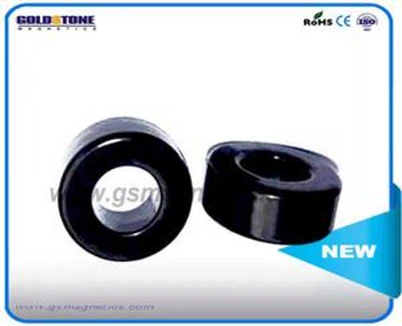
Soft Magnetic Materials - Metal Soft Magnetic Powder Core: Metal soft magnetic powder core is a soft magnetic material made by compressing magnetic powder coated with insulating medium. It combines the advantages of metal soft magnetic materials and soft magnetic ferrite, with high saturation magnetic induction intensity and high resistivity. Mainly used in three application areas: charging piles, on-board/high-voltage chargers, and on-board converters in the new energy vehicle sector. Especially under the trend of 800V platform, metal soft magnetic powder cores will benefit more, and the single vehicle usage is expected to increase from the current about 0.7kg to 2.7kg2.
Soft Magnetic Materials - Ferrite Soft Magnetic: Ferrite soft magnetic is a ferromagnetic oxide mainly composed of Fe ₂ O Ⅲ, produced by powder metallurgy method. There are several types such as Mn Zn, Cu Zn, Ni Zn, etc., among which Mn Zn ferrite has the highest production and dosage. As a functional material with excellent high-frequency electrical characteristics, relatively low cost, and easy processing into different shapes and sizes, it is widely used in new energy vehicle OBC equipment, EV charging equipment, HEV power system power conversion, DC-DC converters, battery management systems, distribution units, etc.
Challenges and Development Trends Faced
challenge
With the termination of subsidy policies, new energy vehicle manufacturers are facing pressure to reduce costs, which also puts forward requirements for magnetic material enterprises to improve the performance of existing magnetic materials or develop new generation magnetic materials to reduce costs. At the same time, market competition will become more intense, posing higher challenges to the technological advantages and innovation capabilities of magnetic material enterprises.
development trend
In the future, with the development of intelligent new energy vehicles, the requirements for the quantity and performance of magnetic components are also increasing. Under the trend of connected vehicles, the requirements for image and information acquisition, data transmission, real-time data processing, and other aspects will become increasingly high. Therefore, the requirements for the quantity and performance of magnetic devices will also increase accordingly. At the same time, enterprises with technological advantages and innovation capabilities will stand out in the competition, promoting the development of the magnetic materials industry towards high-end direction.