

How to choose a transformer type
Leave a message
Old electrician engineer teach you how to choose power transformer type and to calculate transformer capacity.
Power transformer is the key equipment in the power supply system, its main function is to boost voltage or step-down to facilitate the reasonable transmission, distribution and use of electric energy, and has an important influence on the form of main wiring of substation and its reliability and economy. Therefore, the correct and reasonable selection of transformer type, number and capacity is a major problem in the design of main wiring.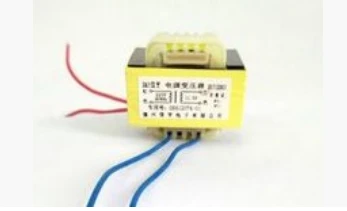
When the distribution transformer is selected, if the capacity is too large, it will form the phenomenon of "big horse car". It not only increases the equipment investment, but also makes the transformer in the no-load state for a long time, so that the reactive power loss increases.
If the transformer capacity is too small, it will cause the transformer to be in overload state for a long time. Easy to burn transformer. According to the principle of "small capacity, dense points", the distribution transformer should be located in the load center as far as possible, the power supply radius does not exceed 0.5 km.
The load rate of distribution transformer is between 0.5 and 0.6, and the capacity of the transformer is called economic capacity. If the load is relatively stable, the transformer capacity can be selected according to the economic capacity in the case of continuous production.
For the special transformer that only supplies power to the power load such as drainage and irrigation, the capacity of the transformer can be selected according to 1.2 times of the nameplate power of the asynchronous motor.
Generally, the starting current of the motor is 4~7 times of the rated current. The transformer should be able to withstand this impact. The capacity of the largest motor directly started should not exceed about 30% of the capacity of the transformer.
It should be pointed out that the drainage and irrigation special transformer should not be connected to other loads in general, so as to stop in time in the non-drainage and irrigation period and reduce the loss of power.
For power supply lighting, agricultural and sideline products processing and other comprehensive power transformer capacity selection, we should consider the power of electrical equipment at the same time, according to the actual possible maximum load 1.25 times the capacity of the transformer selection.
According to the characteristics of rural power grid users dispersed, small load density, load seasonality and strong gap, the capacity adjusting transformer can be used. Capacity adjusting transformer is a kind of transformer which can adjust the capacity without load according to the load size. It is suitable for use in the place where the load seasonal change is obvious.
For substation or large electrical load of industrial and mining enterprises, the general use of mother and child transformer power supply, one (mother transformer) according to the maximum load configuration, the other (sub-transformer) according to the low load state selection, can greatly improve the distribution transformer utilization rate, reduce the distribution transformer no-load loss.
In view of the actual situation that some distribution transformers in rural areas are in low-load operation state for a long time in addition to a small amount of peak electricity load in a year, the power supply mode of mother-child transformer or transformer parallel operation can also be adopted for conditional users. When the load changes greatly, according to the principle of the lowest power loss, the transformer with different capacity is invested.
The capacity of a transformer is a unit of power (apparent power), expressed as AV (volt ampere) or KVA (kilovolt ampere).
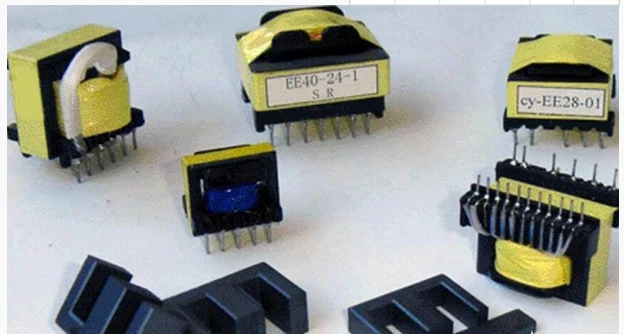
It is the product of the effective value of AC voltage and current, calculated using the formula S=UI. The rated capacity of the transformer will be indicated on its nameplate.
The choice of transformer needs to be clear about the use of how much capacity of the transformer, which is usually considered according to the actual load size of the power system.
A power supply system, after calculation, according to the calculated load S to select the capacity of the transformer. For a single transformer with temporary electricity (on the construction site) and stable load power supply, the load rate is generally about 85%.
More information please check https://www.gsmagnetics.com/transformer-1